Unplanned equipment downtime causing production losses
↓ 22%unplanned downtime
The Challenge
Manufacturing leaders are being asked to cut downtime, improve quality, and make faster decisions as shop floors add more equipment, sensors, and software. Svegile builds Industry 4.0 software that connects machines, plant data, operators, and reporting systems into one shared operating view. The platform supports predictive maintenance, production monitoring, and plant analytics by bringing shop-floor data into one shared view. Teams see equipment health, bottlenecks, and quality issues without waiting on manual reports. We also modernize production and maintenance workflows, from telemetry ingestion through dashboards and alerting. Uptime improves, quality control tightens, and continuous improvement has the data it needs.
Our Approach
1
Implement IIoT data pipelines that connect machines, sensors, and plant systems
2
Build predictive maintenance workflows with condition monitoring and alerting
3
Create production dashboards for quality, throughput, and bottlenecks
4
Feed planning with integrated reporting across operations and maintenance
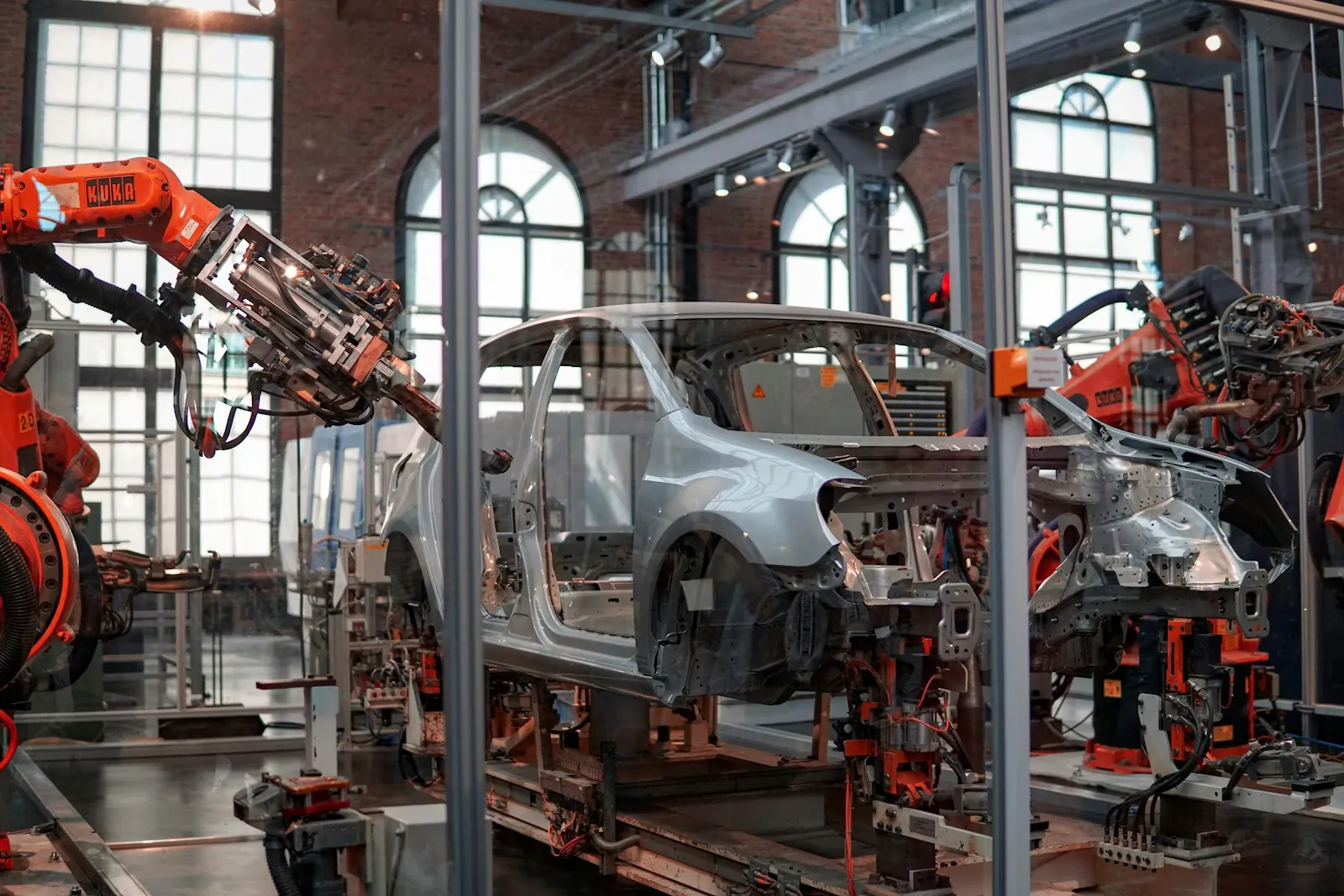
Software for the Smart Factory
Manufacturing is moving toward Industry 4.0 by combining automation, data exchange, and connected production technologies to create a more agile production environment.
Key Challenges
Where Modern Production Floors Lose Speed and Control
Quality control issues detected too late in the production cycle
Siloed data between shop-floor systems and management reporting
Supply chain disruptions affecting production schedules
Svegile's Solutions
Connected Systems for Smarter, Safer, and More Predictable Production
We build Industrial IoT solutions for predictive maintenance, digital twins for virtual prototyping, and Manufacturing Execution Systems. Our work connects machines, people, and processes into one operational view of the production floor.
Technology Stack
Core Layers Behind a Self-Optimizing Factory Floor
IIoT: Sensors and actuators connected to machinery.
AI/ML: Predictive maintenance models that forecast machine failure before it happens.
Edge Computing: Processing data closer to the source for low-latency decision making.
Big Data: Analyzing production data to identify bottlenecks.
Key Benefits
Measured Outcomes Across Reliability, Quality, and Worker Safety
01
Less downtime
Predictive maintenance reduces costly equipment failures.
02
Better quality
Automated visual inspection supports defect-free production.
03
Safer operations
Remote monitoring reduces the need for human presence in hazardous zones.